GCarbon Brazil, Ltda. 

+55 99 8204 0098, w/app +62 821 2231 3367

billwason@gcarbonbrazil.com

GCarbon Brazil; Circular Economy By High Yield Ag, Full Use of Products, Waste Utilization, Reforestation

GCarbon Brazil; Innovation in Agriculture, Biofuel, Food Processing, Cosmetics & Carbon


Introduction:  GCarbon Brazil has created a team of companies, management experts and consultants to build a mega-scale sustainable food/fuel refinery complex while preserving agriculture & jungle ecosystems. GCarbon is introducing new feedstocks at scale for ethanol/meat production (sweet potatoes) and biodiesel/SAF (macauba). Their rotation with existing land uses and crops can provide very high yields/ha and reduce the land needed to produce large quantities of food & fuel with no indirect land use change (ILUC).  This will be accomplished through the lease-leaseback of ranchland for planting macauba trees, by achieving very high yield per ha per year sweet potatoes (100 MT/ha) and by doubling the yield of traditional crops.  We are recycling waste and avoiding disease through deadfall cattle & hog rendering, anaerobic digestion and organic fertilizer production.  We will book high profits due to carbon credits for tree planting & methane capture, rapid growth from demand for near-zero carbon fuels, lower costs, large margins, and smart refining through food & cosmetic co-production. 


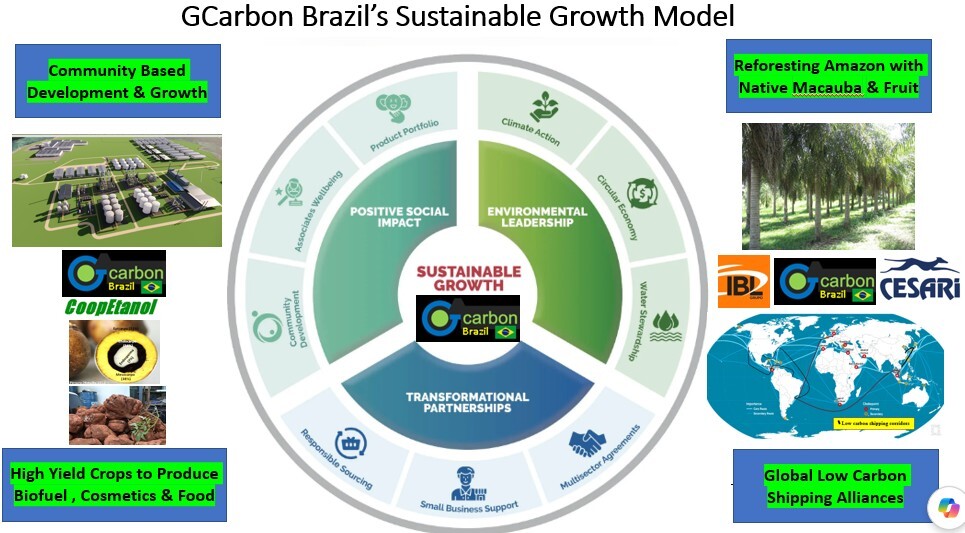
Low Carbon Shipping Corridor: GCarbon Brazil’s current line of business is managing the development of the Davinopolis Dry Port while marketing various commodities.  We have attracted participation by major corporations (Grupo Cesari, IBL & Ambipar) in an International Dry Port/trade center and biofuel project where 22 dry ports & port facilities of Grupo Cesari will form a low-carbon shipping corridor for more sustainable transport & import/export of goods. This has generated income to cover overhead and pursue project development while creating markets for future biofuel, meat, and fish production. It has also led to the formation of a high-caliber management team and corporate alliances to initiate a large capital project. GCarbon Brazil is responsible for developing a low-carbon transportation corridor extending from Brazil to Asia or EU that can drive demand for renewable fuels and offtake agreements from shippers.  This allows access to a market of 25 million MT by 2030 as IMO requirements for 5-10% renewable fuels kick in. 


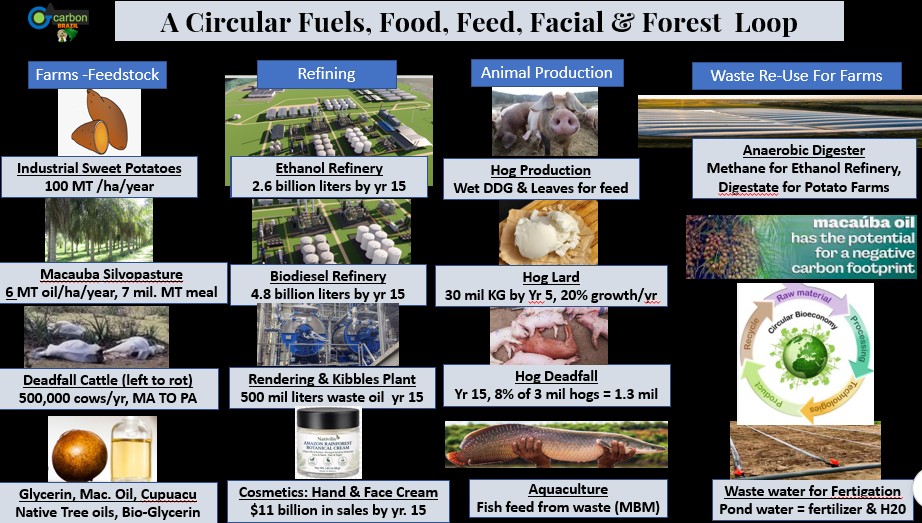
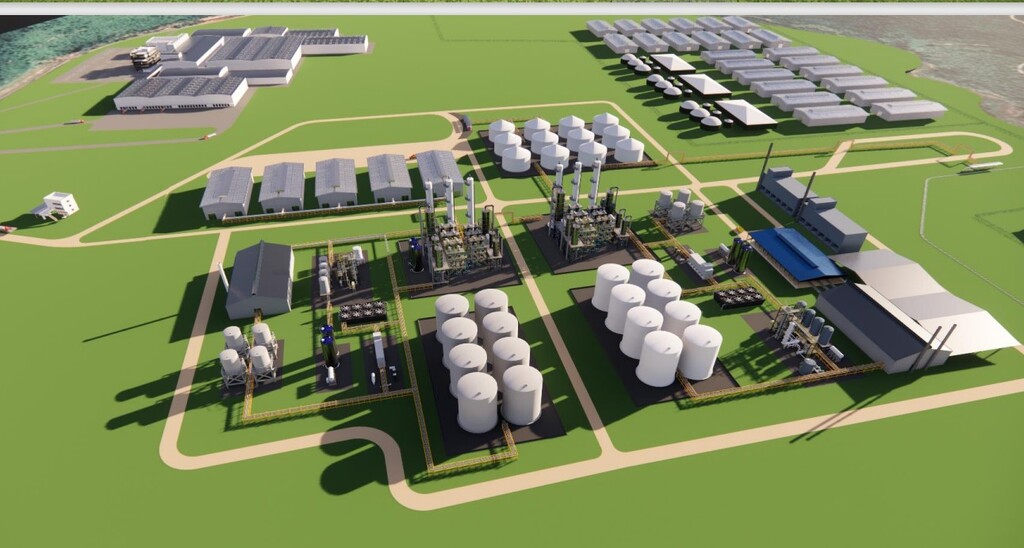
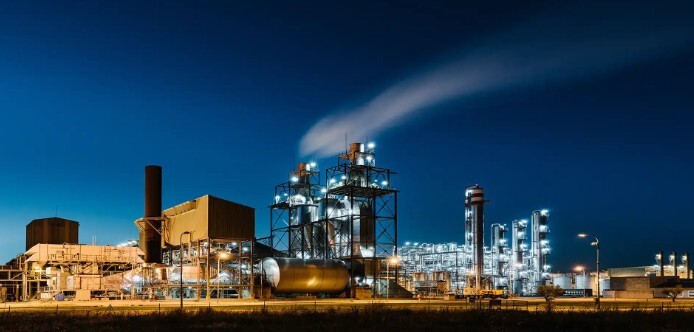
Fully Integrated Biorefining of Food & Fuel:  GCarbon Brazil will build the first fully integrated ethanol, biodiesel, animal production, meat processing, rendering, feed & kibble, and cosmetic facility in Brazil. The elimination of drying of DDG’s and wet feeding of animals results in a 28% reduction in CAPEX & Co2e, lower feed costs, and less water use. The company will grow through innovative approaches to producing feedstock for food and biofuel and by using carbon credits from native tree planting and biochar to offset planting costs and create low-cost sustainable feedstock for biofuels, cosmetics, and animal production. By Year 15, GCarbon will achieve vertically integrated high-profit production of both FOOD & FUEL from less land through the following achievements:


1) Planting 585,000 ha of 100 MT/ha/yr (10X yield) sweet potatoes to produce 2.4 billion liters of near-zero-emission ethanol plus 2 billion Kg of pork.  This will be done using 1/10th the land now being used to grow corn & soybeans. 


2) Rendering of dead cows & hogs and reforesting 1.2 mil. ha of cattle farms with native trees while teaching ranchers how to double their cattle density.  This will allow us to produce 4.8 billion liters of zero-emission biodiesel. 


3) Obtaining carbon credits for native tree reforestation and permanent carbon removal with biochar in planting.

4) Plant 1 mil. ha of silvopasture on cattle farms through lease/leaseback & continued cattle grazing and another 1 mil. ha of native fruit & oilseed trees on deforested indigenous or federal reserves to create a high-value cosmetic line using native oilseeds, bio-glycerin and Amazon water.  


5) Build an integrated biorefinery-food complex that will use wastes from one process to provide feedstock for another process, and that fully recycles waste at the plant and in the draw area. 


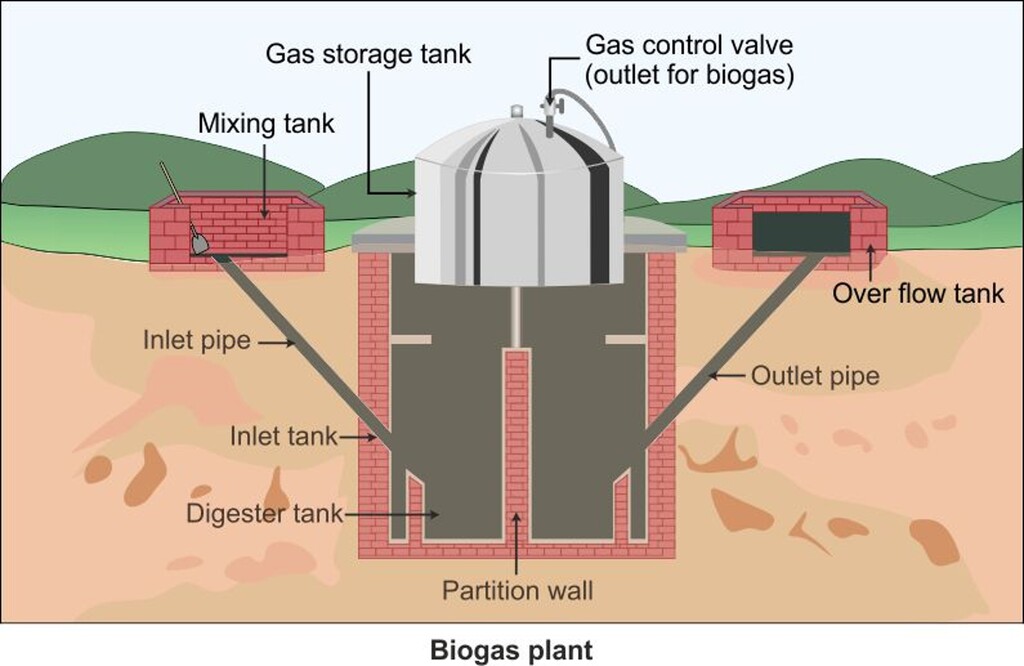
Methane Capture & Anaerobic Digestion:  The capturing of methane using anaerobic digesters (AD) and the use of the gas for steam to refine ethanol will result in net-zero emissions since methane has a 28X greater Co2e impact. The AD digestate provides fertilizer to lower sweet potato growing costs and climate emissions. 


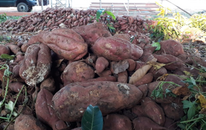
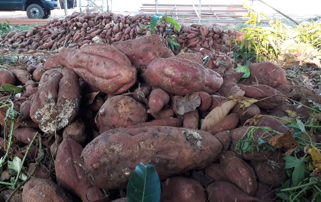
Super-High Yield Sweet Potatoes:  The industrial sweet potato technology is a game-changer in that it leads to super-high-yields at a low-cost/ton.  We will hire a team of professional botanists to assist in the planting program.  Embrapa has validated yields of 100 MT/ha/year.  This is 10X  the yield of corn/soy rotations = high profits.


Low Cost Feed for Hogs from Ethanol & Crop Wastes:  Wet ethanol residual and vines and leaves provide complete nutrition for hogs.  We will produce at least 30 tons of feed per ha. Feed is 75% of the cost of producing hogs. This allows for rapid expansion of hog production. There is a strong demand for pork in export markets. We will produce 193 mil. KG of pork by yr. 5, at $2.50/Kg = $483 mil. sales vs $64 mil. in COGS. 


Rendered Waste to Biodiesel:  Pork fat is 12% of the total weight and is classified as waste for biofuel refining.  About 8% of hogs die before maturity. There are 42 million head of cattle in 3 states near the bio-refinery and only 1 other rendering plant.  A 4% deadfall rate = 1.7 million cattle.  We can pick up dead cows for free at no extra labor & fuel cost when planting macauba trees using the same truck.  These animals will be rendered in a plant at the biorefining site to produce waste oil for biodiesel and MDM. UK provides a “double carbon credit” for waste oil biodiesel of $1.36/liter plus a $1.19/liter fuel value.  We will sell 40.2 mil. liters for $112 mil. in year 5. By year 9 the volume doubles and by year 15 it is 6X higher.  There are almost no feedstock costs and the biodiesel has more than double its fuel value from waste utilization.     


Rendering By-Products to Produce Pet Kibble & Fish Pellets:  A by-product of rendering is mechanically deboned meat (MDM), which is 40% of the dead cattle's weight .  This provides an ideal meat for fish feed pellets and pet kibble. We will produce both an economy kibble with this MDM meat and a premium kibble using fresh pork meat by-products. Mixing in non-GMO sweet potato starch, corn & macauba fiber will result in high sustainability kibble and feed.  Our fish pellet production will lower the feed cost of fish farming, reducing OPEX by 60%..


Near Zero Emission Biofuels: The combination of no drying of DDG’s, methane capture and high-yield feedstock will result in a life-cycle emission level of under 19 grams of Co2 per MJ for both ethanol and biodiesel.  This is below electric vehicles and UCO biodiesel and qualifies the fuel as near-zero emissions. At this emission level, LCFS credits (@ $130/MT) and RIN credits (at 50% of their value) are worth $0.63/liter plus fuel value in CA. This doubles revenues & triples profits. GCarbon Brazil will have 2.1 billion liters of sweet potato ethanol and 3.9 billion liters of waste fat and macauba biodiesel by year 15 at near-zero emission levels.  Vertical integration, reforestation and use of waste means production costs are much lower than competitors while the value of the fuel due to near-zero Co2 is much higher.

.

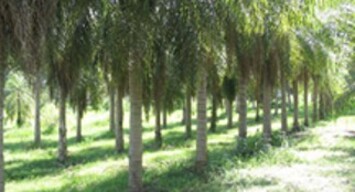
Native Tree Reforestation of the Edge of the Amazon:  We will be the first company to initiate a lease-leaseback program with cattle farmers that provides a credible path for earning carbon credits as there is no ILUC impact because cattle farmers return to graze cattle after 3 years.  We are also planting native macauba trees with no monoculture (cows & trees).  There are over 32 million ha of ranchland in 3 states next to the plant (Para, Tocantins & Maranhao).  Reforesting only 4% of these ranches with macauba provides 1.2 mil. ha. of silvopasture and enough oil for 3.4 billion liters of biodiesel. As part of the implementation plan for leasing cattle land, we will provide watering holes and feed additives to lower methane (red seaweed, calliandra calothyrsus).  This will reduce methane emissions by 50% and allow ranchers to double cattle density.  We have a unique approach to native macauba tree planting with ranchers.  We will lease land, plant and own trees, while also keeping ranchers growing cattle via pasture rotation.  After 3 years, ranchers will return to macauba plantations and continue growing a higher density of cattle because of shade, grass seed & watering ponds.  Trees will protect the soil from heavy rain. There will be no indirect land-use change impacts. We will plant macauba trees at a ramp-up rate of 6500 ha in year 2, 13,000 ha in year 3, and then increasing at 13,000 ha/year.  By year 15, we will have 1 million ha of reforestation of degraded pasture with native macauba trees and 667 ,million ha. of multistory reforestation of deforested jungle on indigenous or federal forest reserves.. Yields of 6 tons of oil/ha will result in over 10 mil. MT of  oil/year. Net result = vertically integrated 7 mil. MT of biodiesel , food and cosmetic feedstock base. 


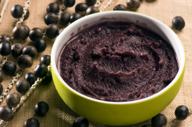
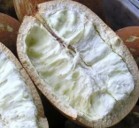
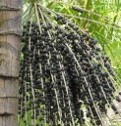
   CORSIA Compliant Carbon Credits:  Carbon credits can greatly reduce up-front capital costs of planting native macauba, cacao, acai and cupuacu trees. Macauba has very high-yields of oil by year 5 (6 T/ha) and the interior nut oil is ideal for cosmetics.  Cupuacu and cacao both produce excellent juices and chocolate while the seeds also provide cosmetic butters.  Acai trees protect stream beds and swamps and provide juice & activated carbon.  All of the trees can be planted through carbon credit funds.  CORSIA certification of macauba carbon sequestration using VERRA or other certifiers will allow us to sell carbon credits at $35/MT and offset tree planting costs at a time when airlines are unlikely to meet carbon commitments in the EU & globally.  This will generate $11.7 mil. in year two and $3.1 billion by year 15.  The contract value of carbon is 10X this amount, since payout occurs over 10 years.  The contract value in year 2 is $117 million (on the balance sheet) and increases to $310 billion in year 15. The balance sheet builds up to $110 billion of carbon receivables to collateralize bank loans, land purchase or other project goals. Studies by EMBRAPA and U. of Vicosa have confirmed that macauba can sequester an average of 18 tons of carbon per ha per year.  This has high economic value because we can earn carbon credits that are worth $35/ton when we get CORSIA certification on both silvopasture and multi-story reforestation.  By year 3 silvopasture projects will have sales income of $39.5 million, year 5 $157.2 mil., year 10 $1 billion & yr. 15, $3.1 billion. Reforestation yr.3, $4.6 mil., yr. 5 $21.2 mil, yr. 10 $199 mil, yr. 15 $972 mil. More important than the income is the impact on the balance sheet.  Each of the income flows above results in a contract with 10 times the value, since it is a contract for the 25-year tree life that is paid out over 10 years.  The balance sheet rapidly increases in value and contracts provide collateral for loans.  By year 2, we will have $105 million as collateral from silvopasture increasing to $1.4 billion year 5, $9.3 billion year 10 & $28.2 billion year 15. Reforestation projects will provide $41.3 mil. year 3 that increases to $191 million year 5, $1.8 billion yr 10 and $8.7 bil. in year 15.  


Permanent Carbon Removal with Biochar::  We will also be seeking carbon credits for turning waste biomass into biochar using mobile and in-plant biochar production.  The mobile units will be placed in farming areas for coop use in conjunction with enforcement of a "zero burn" biomass policy.  This will include mulch production from leaves and small branches and biochar production from larger branches.  Farmers are always accumlating biomass from cleaning pasture land of stumps for crop production or from deadfall trees.  There is also a lot of waste biomass from palm fronds, acai fruit seeds, cupuacu residues, and other waste.  A no-burn policy is only enforceable if farmers have alternatives and motivation.  Adding biochar when planting can double yields when planting occurs in high acid soils which are common near the plant area.  Biochar in the soil locks carbon for centuries and is considered permanent carbon removal so it is worth much more in carbon markets.  Current prices range from $100 to $300 per metric ton. This makes it attractive to incorporate biochar in the carbon credit program. 


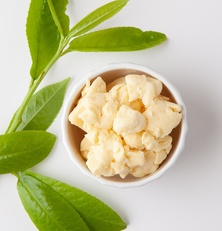
BioBased Glyceri, Macauba Oil, Cupuacu Butter = Ideal Cosmetic Ingredients: A byproduct of biodiesel production is glycerin that is used in cosmetics.  Macauba oil has ideal properties for cosmetics. We will also reforest deforested indigenous jungles with macauba and cupuacu or cocoa trees, which provide cupuacu or cocoa butter.  These are all excellent ingredients to produce healing cream. Reforesting the Amazon also provides a great way to sell cosmetics as people rejuvinate their skin with natural ingredients while recreating a native forest and biodiversity & sustainability.


Proprietary Formula for Medicinal Cream for Acme and Other Diseases:  GCarbon Principal Bill Wason and his partner Lorenzo Payan are patenting a process to add a gas to cosmetic cream oil to treat acme and other skin diseases along with other proprietary ingredient.  This tech will be licensed exclusively to GCarbon Brazil to develop a highly efficacious medicinal cosmetic product to sell with other hydrating creams.


Large Cosmetic Market and Ideal Niche for GCarbon Brazil: The total global cosmetic market is now at $700 billion and expected to grow to $1.6 trillion over 15 years.  This allows for large volumes of sales while capturing only a small percentage of the global market. We will have a proprietary medicinal treatment through licensing, low product cost & be directly responsible for Amazon reforestation at a large scale.  We will be the only cosmetic manufacturer responsible for reforesting millions of hectares of Amazon jungle with native trees while getting almost all of its ingredients from that reforestation effort.  This will lead to strong product sales and unique niche for our products. 

:  


BY YR 15, WE WILL HAVE THE FOLLOWING PRODUCTION/YEAR:

2  billion


KG of MEAT/YR (live wt) from only ethanol wet ddg's/vines/leaves

2.5 Billion


Liters of ethanol PER YEAR  from 1/4th the land vs corn   


10  Billion 


liters/YEAR of oil for biodiesel, saf, or cosmetics 

1.7  Million


ha of native tree amazon reforestation


2.3  billion


KG of COSMETIC CREAM FOR HYDRATION OR MEDICINAL USES

744 mILLION


    KG KIBBLES/FISH FEED

    FROM DEADFALL CATTLE WASTE    


503 mILLION


liters ACAI OR CUPUACU JUICE

FROM NATIVE TREE FORESTS 

10 THOUSAND


JOBS FROM REFORESTATION, AGRICULTURE & PROCESSING

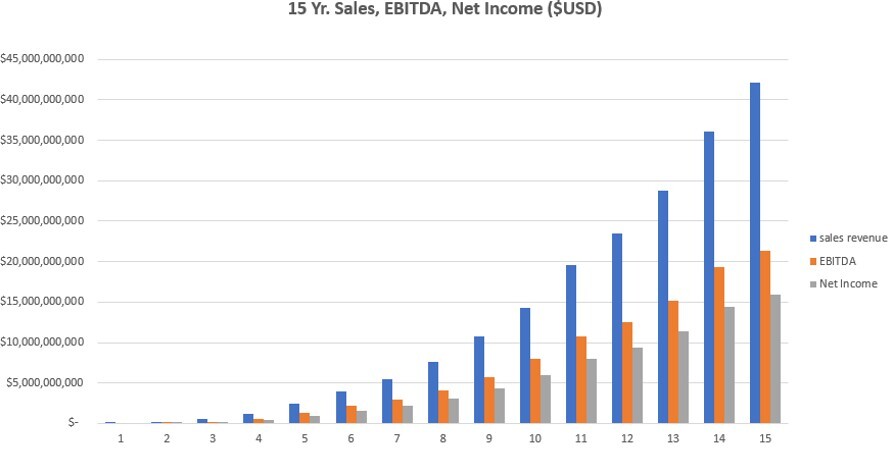
     Financial Results;  High Profits from Waste Use, Co-Production & Efficiency

     Environmental Results;  Native Tree Amazon Reforestation Program

Each hectare of macauba silvopasture results in 18 tons of carbon sequestered in the ground, roots and soil per year.  We plan on reforesting 1.7 million ha by year 15 so this is 30 million MT per year or 765 million MT over 25 year tree life. Shading from trees and watering holes helps avoid dry-season die-off of cattle. We plan to obtain CORSIA-aligned carbon credits for this sequestration that can offset the tree-planting cost so the 5-year wait to fruiting is no longer an issue. 


Our lease/leaseback program with cattle ranches allows them to keep the land and we own the trees/fruits.  This means the cattle can come back and graze between trees after 3 years with no indirect land use change. We will provide red seaweed and calliandra leaves to ranchers to reduce methane by at least 50% & macauba feed will mean more meat/cow. Biochar and special low light grass seeds will greatly improve pasture quality.

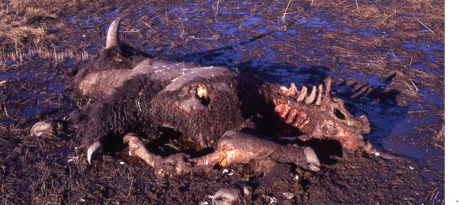
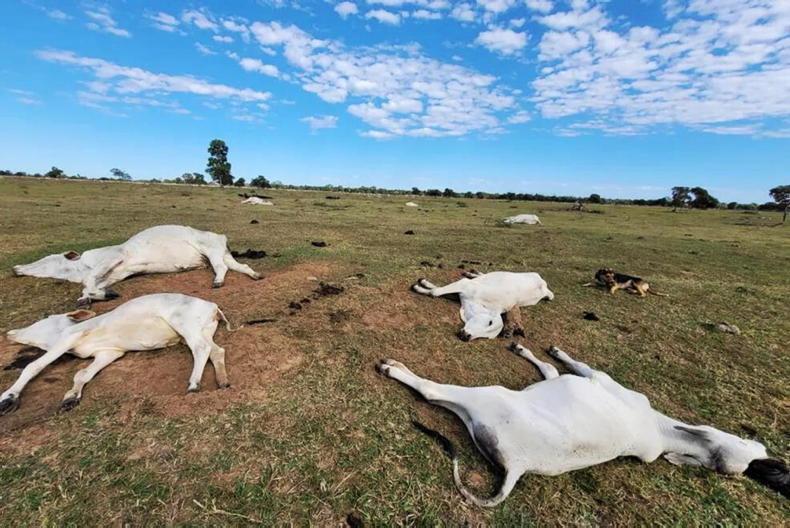
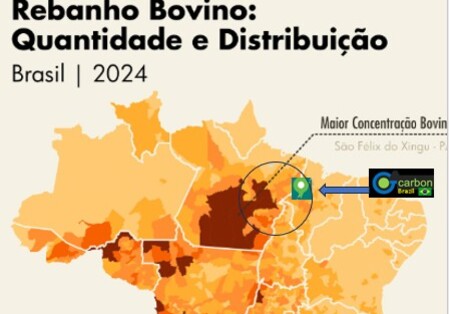
There are 43 million head of cattle in the 3 state area of Para, Maranhao and Tocantins, and most are within 500 km of the refinery complex. There is only one rendering plant with expensive pickup service so most cows that die rot in the fields (4%/year).  We will pick up dead cows for free using the same trucks that go out daily planting macauba seedlings.  This avoids the spread of diseases (foot & mouth, others). Cows will provide oil for biodiesel or SAF and meat for fish feed or kibble.


Many indigenous and federal forest reserves have been illegally deforested and are threatened by illegal cattle grazing.  We are proposing to reforest 700.000 ha with a combination of cupuacu, acai, and cacao trees coupled with macauba to provide shading for cupuacu and cacao.  This will mimic a jungle while providing lots of fruits for animals and humans.

18 MT/HA CARBON SEQUESTERED FROM MACAUBA TREES

Each hectare of macauba silvopasture results in 18 tons of carbon sequestered in the ground, roots and soil per year.  We plan on reforesting 1.7 million ha by year 15 so this is 30 million MT per year or 765 million MT over 25 year tree life. Shading from trees and watering holes helps avoid dry-season die-off of cattle. We plan to obtain CORSIA-aligned carbon credits for this sequestration that can offset the tree-planting cost so the 5-year wait to fruiting is no longer an issue. 

 DOUBLE THE CATTLE DENSITY WITH TREES, 
50% LESS METHANE

Our lease/leaseback program with cattle ranches allows them to keep the land and we own the trees/fruits.  This means the cattle can come back and graze between trees after 3 years with no indirect land use change. We will provide red seaweed and calliandra leaves to ranchers to reduce methane by at least 50% & macauba feed will mean more meat/cow. Biochar and special low light grass seeds will greatly improve pasture quality.

WE WILL PICK UP DEAD CATTLE WHEN WE PLANT TREES = LESS DISEASE RISK

There are 43 million head of cattle in the 3 state area of Para, Maranhao and Tocantins, and most are within 500 km of the refinery complex. There is only one rendering plant with expensive pickup service so most cows that die rot in the fields (4%/year).  We will pick up dead cows for free using the same trucks that go out daily planting macauba seedlings.  This avoids the spread of diseases (foot & mouth, others). Cows will provide oil for biodiesel or SAF and meat for fish feed or kibble.


MULTI-STORY NATIVE TREES IN DEFORESTED RESERVES

Many indigenous and federal forest reserves have been illegally deforested and are threatened by illegal cattle grazing.  We are proposing to reforest 700.000 ha with a combination of cupuacu, acai, and cacao trees coupled with macauba to provide shading for cupuacu and cacao.  This will mimic a jungle while providing lots of fruits for animals and humans.

     Phase 1 Focus:  Sweet Potato Ethanol, A.D., Cosmetics, Tree Planting

Ethanol refining, hogs
Cupuacu Cosmetics
Anaerobic Digester 
Native Tree Reforestation
Native Fish Fertigation

Sweet Potato Ethanol & Co-Producing Hogs

Phase 1:  Ethanol, hog production & infrastructure:

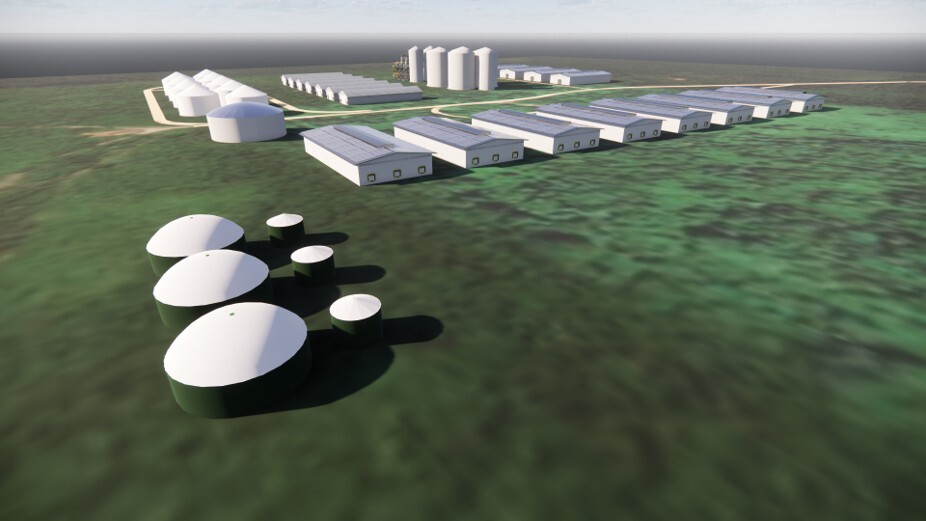
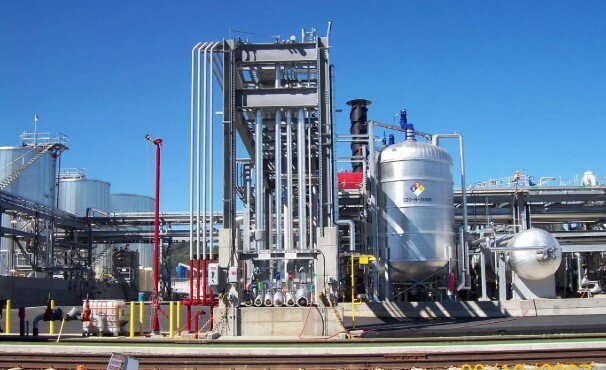
Production activities in years 1 and 2 involve refining ethanol from industrial sweet potatoes and corn and using wet residues, leaves and vines to feed hogs. We will produce 72 mil. liters of ethanol and 140,000 hogs by year 2.  Key to reaching near-zero emissions is the anaerobic digester that will capture methane from hogs and use it for ethanol refining and provide digestate for potato fertilizer. The facility will be linked to rail through a rail loop and will install water and wastewater treatment, fire safety, loading rack & other infrastructure.  We will take advantage of the 90% renewable Brazilian grid to produce steam from industrial heat pumps to achieve low costs, low carbon & high reliability.

Native tree reforestation = Better Cosmetics

Phase 1:  Cosmetics production

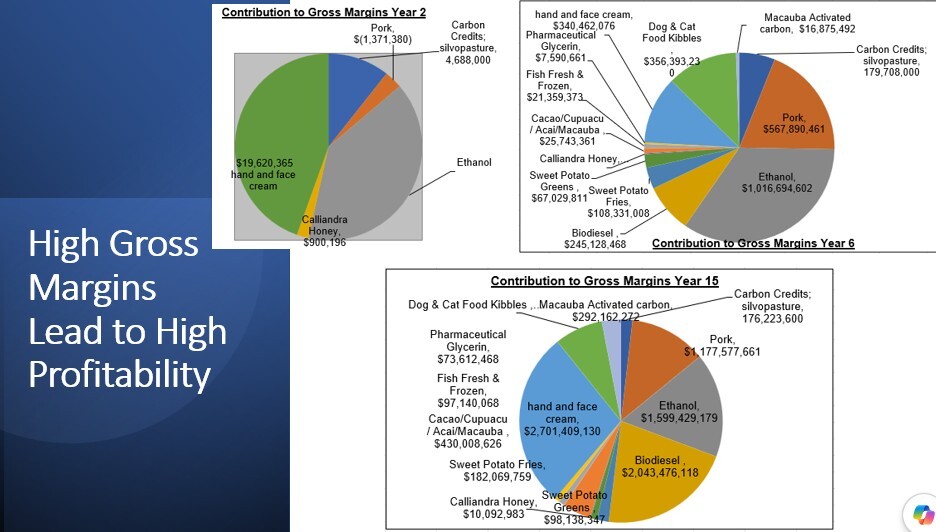
A large share of total income and gross margins will result from the sale of skin care products starting in year 2.  The large size of the overall market will allow GCarbon to obtain an $11 billion market share by year 15, while utilizing only 1% of the market.  We will capture this market share by offering a better product line, innovative marketing, and better product differentiation at retail levels or online.  This will rely on the use of Amazon ingredients in products that are sourced as a result of the native tree reforestation effort on ranches & deforested indigenous and federal reserves.

.

Achieving near-zero-emission ethanol by recycling methane

Phase 1: Anaerobic Digester

The key to achieving near-zero-emission ethanol is to capture methane from co-production of hogs.  This involves a combination of covered insulated lagoons to capture methane, storage systems for treatment and removal of Co2 & sulfur dioxide.  This results in natural gas for use in ethanol steam production. Credit from avoided methane combined with no drying of DDG's and super-high-yield crop production leads to near-zero-emission ethanol.  We will build our own lagoons that will consist of a heavy-duty liner and cover and insulating SBB blocks to maintain even temperatures.  We will also experiment with catalysts to convert Co2 to CO and add to methane output.  Use of digestate in potato and macauba seedling production will greatly improve agronomic results and lower fertilizer costs. 

.

Amazon Reforestation w/ Silvopasture & Multi-Story Jungle

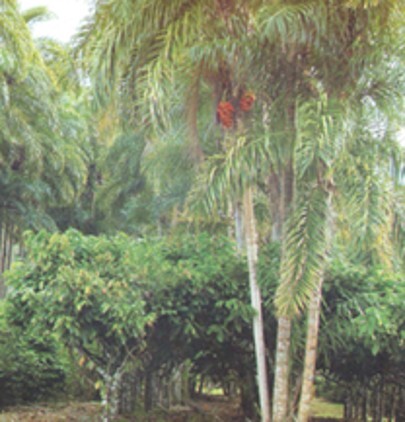
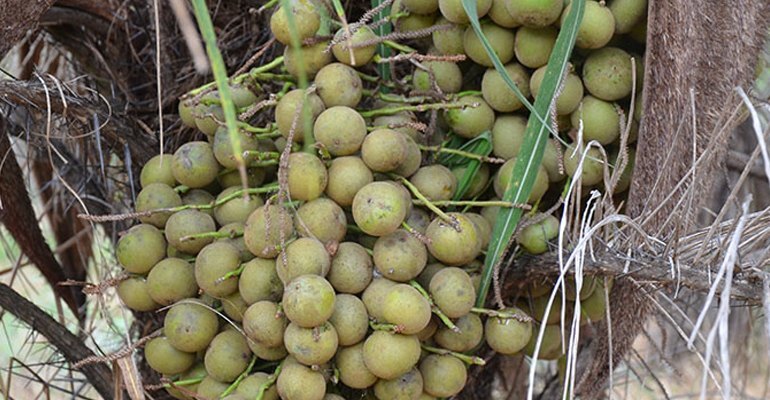
The most important element of phase 1 project implementation is to initiate pilot and then large-scale tree planting using native macauba, cupuacu, cacao and acai trees. The main objective is to document the sequestration achieved based on planting in both cattle ranches and on deforested indigenous or Federal reserves. We will work with VERRA to document the level of sequestration by duplicating the protocol used to obtain 18 tons of carbon sequestration as documented by Embrapa and U. of Vicosa.  We will plant 400 trees per ha in ranch land by leasing the land, setting up irrigation ponds, providing special soils for seedlings and growing seedlings near the biorefining complex. This should result in mature trees by year 4 and fruiting trees year 5. Cattle will return after 3 years after planting low light grass seed and enhancing soil with biochar and fertilizer.  This will provide a shaded and improved pasture for cattle to return.  We will also co-plant macauba and cacao or macauba and cupuacu in a 2 story configuration on indigenous or federal reserves that have been deforested.  This will duplicate the Amazon multi-story forest while providing both oil seeds and fruits for human harvests.  The tightly compated trees will also support wildlife corridors and augment biodiversity and habitat for birds and animals. We will start with two 100 hectare pilot projects to get data for VERRA and CORSIA compliant carbon credits and will then expand logarithmically by 13,000 ha per year once approval of carbon credits is confirmed.  The fruits will provide feedstock for biodiesel or SAF in year 5 and cosmetics starting in year 4. 

Native Fish Fertigation For Dry Season Water & Fertilizer

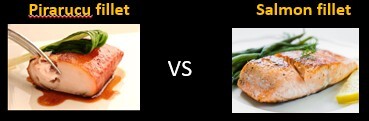
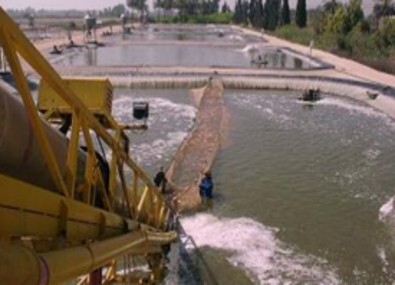
Brazil has a dry season that affects agricultural production about 4 months out of the year.  To optimize yields of industrial sweet potatoes, corn or soy, GCarbon Brazil will introduce the concept of "fertigation ponds".  This involves either stream diversion or wells to obtain water for aquaculture ponds that are then used 6 months of the year for growing fish and then drained over 4 months to provide fertilized water for crops.  This increases income from production of fish and reduces requirements for fertilizer while providing irrigation water during the dry season.  We will start by growing tilapia or tambaqui because of its ease of production but will also grow pirarucu (paiche) on a year round basis to provide premium aquaculture fish.  Over time, we will have large scale production of pirarucu and export fresh fish to the USA market. In the interim we will supply fresh fish to the local markets where there is a strong demand for fish.

     Phase 2 Focus:  Meat, Rendering, Biodiesel, Kibble, Juice, Fish & Feed 

Phase 2: Expanded Refining
Phase 2: Meat Processing
Phase 2: Fish Processing
Ph. 2: Dead Animal Rendering

Ph. 2: Refining Biodiesel 

Ph. 2: Kibble & Fish Feed


Ph. 2: Cat Litter & Flea Powder

Phase 2:  Expanded refining operations, animal production & cosmetics

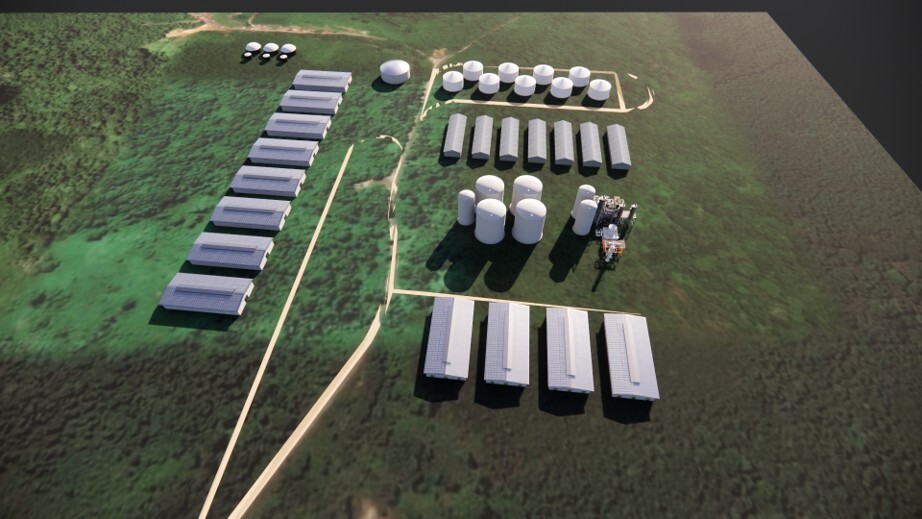
All production activities in years 1 and 2 will be expanded in year 3 as more hectares of potatoes, corn & soy are planted and small farmers start to participate.  We will match expansion with careful attention to efficiency of steam production using industrial heat pumps, larger water & wastewater treatment capacity and well management movement of trucks & rail. Cosmetic bottling will expand to get ready for tree harvests in year 4 and gain market share.

Phase 2: Meat Processing to Meet USDA, Chinese & Global Standards

A state-of-the-art meat processing plant will be set up to process hogs into pork meat and by-products.  The primary market for pork is China, so all requirements for Chinese certification will be met.  The plant will follow all HCAAP standards and USDA requirements as well so meat can be exported to North America.  Europe also has specific requirements for sustainability and quality that need to be adhered to for exports to the European Union or UK. 

Phase 2: Fish Processing to Export Fresh and Frozen Fish to USA & Globally

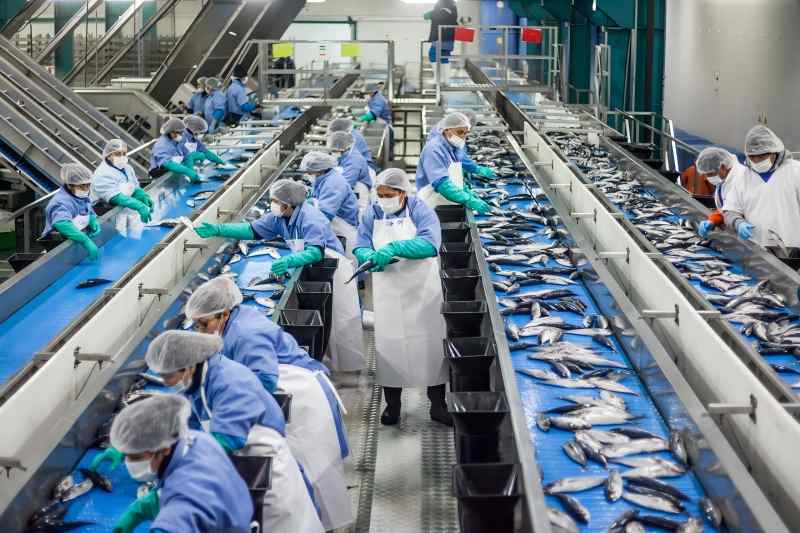
A state-of-the-art fish processing plant will be set up in parallel to meat processing to process fish for export.  This will expand from initial processing of tambaqui and tilapia for local markets using municipal slaughterhouses.   The primary market for fish is the USA.  As a result,  we will follow all HCAAP standards and USDA requirements so fish can be exported to North America.  We can also export to Europe. We will process fish the same day they are caught, use ozonated water for cleaning, put ozone in the ice for chilling, and blast-freeze to -20 deg. C to ensure premium-quality fresh and frozen fish.  Once the volume gets high enough, we will lease a cargo jet and fly fish fresh from the ponds to Miami & the Northeast for sale direct to fish markets, supermarkets and fine restaurants. 

Phase 2: Dead Animal Rendering into Oil for Biofuel and Meat for Kibbles/Fish Feed

A high-tech rendering plant will be built primarily to collect the 4% "deadfall" cattle that die before maturity in the 3-state region and are now contributing to disease.  It will also utilize floor droppings, blood, and unusable meat wastes from pork processing. Finally, an 8% premature death rate on hogs will contribute to rendering feedstock  Deadfall cattle will be picked up free from cattle ranchers in any locations where we are planting macauba trees. This will allow us to use the same truck on its return to the nurseries to carry deadfall. The one other rendering plant in the region charges a high fee for picking up deadfall, so ranchers will welcome our service. This will increase participation in macauba land leasing.  


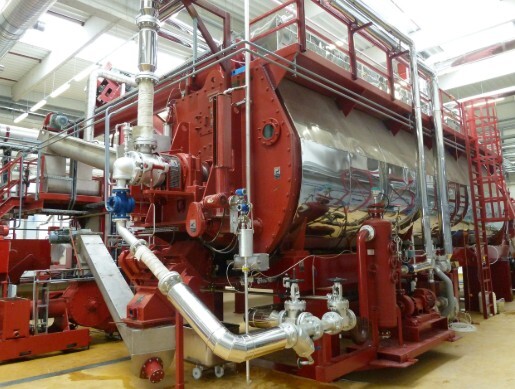
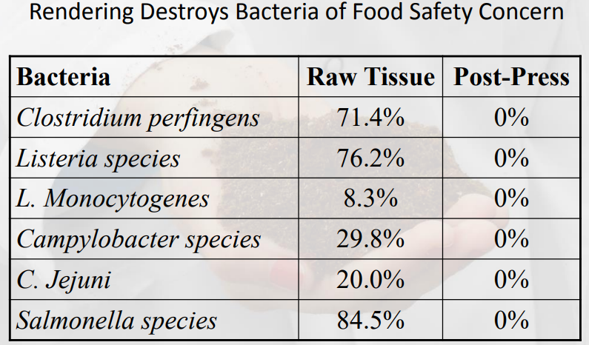
The core equipment in a rendering plant is a large series of high-pressure steam boilers that achieve temperatures of 800 Deg. C to sterilize the meat and oil.  Oil is seperated for use in biodiesel or SAF and the remaining meat and bone meal is ground up and extruded.  There is only one other small rendering plant in a 3-state area near the plant with 44 million head of cattle, a 4% deadfall rate annually and a 50% market share this is 835,500 cattle (@ 128 Kg average), mostly left in the fields to rot. By following all HCAAP standards and USDA requirements, we will produce a high-value feedstock for biodiesel or SAF and a Mechanically Deboned Meat that we will use in the production of kibbles and fish feed.  We expect to reach processing volumes of 107 million Kg by the third operating year (year 5) based on installing 324 tons of processing capacity per day.  

Phase 2: Refining Biodiesel from Waste Oil and Native Macauba Tree Fruits

A refinery will be built next to the rendering plant to allow for direct piping of rendering oils for refining into biodiesel.  Initial capacity of biodiesel production will match the expected production of rendering oils by year 2 or 3.  This will provide a large feedstock base that will allow for production of 100 million liters of biodiesel in the first few years. All of this biodiesel production will be derived from waste, which will allow for export of the biodiesel to the UK to earn double carbon credits for biodiesel utilization. This is justified, since there are large methane releases from cattle left in the field to rot that will be avoided through the collection and rendering of dead cattle.  


The design of the plant will be unique as it will use an ethyl ester refining process instead of the normal methy ester process.  This is a well developed refining technology that is rarely used in Brazil because methanol is readily available where most biodiesel plants are located in Southern Brazil and is a little cheaper than ethanol.  We will have an ethanol plant in the same location and with the same owners as the biodiesel plant.  By using this design, we will avoid buying methanol derived from natural gas, shipping it to Maranhao, and paying a 17% VAT tax.  More importantly, using ethanol instead of methanol improves the carbon footprint of our biodiesel by 9.5-10%, since our ethanol will reach near-zero emissions.  The use of high-efficiency refining processes, the high renewable content of electricity, industrial heat pumps for steam, and avoided methane from using waste oil will lead to zero or negative carbon emissions. 


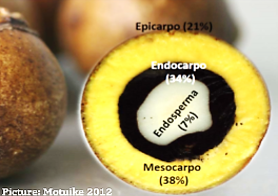
Biodiesel apacity will expand rapidly in year 6 to accommodate large quantities of oil extracted from the macauba reforestation and silvopasture efforts. We expect to increase the planting area of new trees on silvopasture ranch land by 13,000 ha per year starting in year 3.  By year 15, we expect to plant 1.2 million ha of trees on ranchland and another 600,000 ha of trees through illegally deforested tree planting on indigenous and federal reserves.  This will provide at least 7 million MT a year of oil for production of biodiesel, making GCarbon Brazil one of the largest biodiesel producers in the world.  We will also be the only vertically integrated producer that has a very low cost for feedstock (about $300 per ton) vs. all  other producers buying oil at 4 to 5 times this cost.  Since 85% of the cost of biodiesel is feedstock, this will give us a huge competitite advantage.


Phase 2: Producing Kibble and Fish Feed from Meat Processing Waste & Potato Starch

A production opportunity will be created by the co-location of sweet potato ethanol refining, meat & fish processing, and rendering.   Waste materials from these processes provide feedstock for kibble (dried pet food) and fish feed.  Refining of sweet potato ethanol results in a large amount of potato starch, which is an essential ingredient for pet food kibble and fish pellets.  Sweet potatoes will be grown without genetically modified organisms (non-GMO), increasing the value of kibble and fish feed products.   Meat processing involves both high value meat, and organs for export and low value organs, blood, cut wastes and other material that are ideal for fish feed or kibble.  We will combine this material with potato starch to produce a premium line of fresh meat kibble.  We will also produce an economy line of kibble using the Mechanically Deboned Meat (MDM) from the rendering operations.  


We will have ingredients not normally available to kibble producers, to differentiate our pet food product line in the market.  This includes sweet potato starch that is non-GMO with a high protein content (23-28%), pork meat by-products that are fed sweet potatoes (with a low-carbon footprint from methane management and feed characteristics), fish meat by-products from fertigation ponds with sustainable feed, and micro-ingredients such as sweet potato leaf fragments for vitamins & protein (dry leaves have 17% protein).  We will also use various parts of macauba, acai & cupuacu fruits, including by-products (pulp residual, nut flour), and macauba or acai oil.


This will be very useful when marketing kibble in both the retail market and online forums. We will have a unique kibble product with high nutritional characteristics and superior sustainability.  Our marketing materials will emphasize the source of our high-quality ingredients and how they were created from the production of sustainable biofuels, waste re-utilization, and planting of native trees in the Amazon.  We will reinforce this marketing effort by offering to plant a tree for every bag of dog or cat food purchased.  This will provide zero-carbon-footprint dog or cat food and create a wildlife corridor for jaguars. We will use images of parrots and jaguars on the kibble bag so customers can bond with the brand through their love of their own animals and a special connection with Amazon wildlife.


Phase 2: Diatamaceous Earth Cat Litter and Flea & Tick Powder for Pets

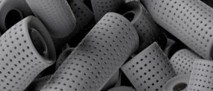
GCarbon Brazil has formed a joint venture with Sustainable Building Blocks to develop manufacturing capacity for cat litter and flea & tick powder from diatomaceous earth.  Sustainable Building Blocks is a partner in a diatomaceous earth mine in Northern Mexico. Diatomaceous earth is an ideal material for cat litter because it is super-absorbent due to its many microscopic pores.  This means odors can be eliminated for 2-4 weeks instead of only a few days with bentonite cat litter.  This will establish us as a premium quality cat litter supplier.


 We will use the JV to develop pet food products and create a market niche in the pet market in the USA in year 1 and 2.  This will then make it easier to introduce our line of kibble products in year 3.  The same market strategy of Amazon reforestation will be used to market cat litter and flea and tick powder, with a tree planted for each bag of cat litter or flea powder sold. We will also use the same animals (jaguars, parrots, etc.) to promote the consumer's connection to the Amazon and the entire line of pet products. 


Phase 2: Native Tree Reforestation = Raw Materials for Tropical Juices

We will be reforesting deforested areas of the Amazon with a combination of macauba and fruit trees that need shade (cacao & cupuacu) and acai in swamp land and stream or river edges, This offers an opportunity to manufacture native Amazonian fruit juices and concentrates in parallel with processing of cupuacu butter for cosmetics and chocolate..  While there are many competitors, we will be the only producer involved in a large-scale reforestation effort.  This will help generate strong interest in the consumer products, since we will link juice production to the story of how this reforestation is occurring.  


The other major advantage is the capacity for processing and certification of products to USDA and other quality standards.  We will already be processing oils, biofuels, meat and kibble, so adding tropical fruits will be an extension of the same food processing infrastructure.  The same water & wastewater systems, freezer infrastructure, steam capacity and renewable electricity will be useful in the production of fruit juices or concentrates. The volume of production wll also ramp up quickly as we increase reforestation efforts and trees mature. 


Phase 2: Honey for Pollination and to Add to the Amazon Food Product Line

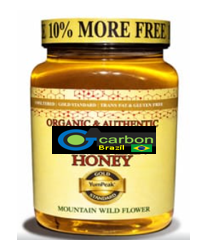
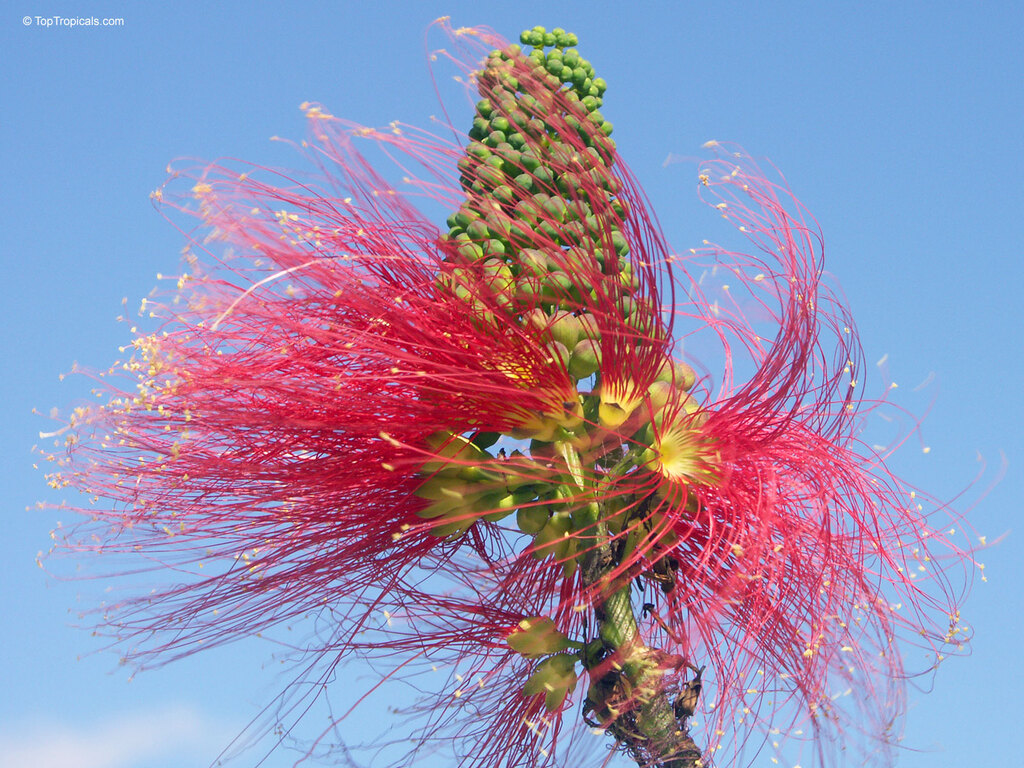
We will also be producing honey in conjunction with running beehives.  Bees are very important to the pollination of crops, particularly sweet potatoes, macauba trees, fruit trees, and other crops.  We will be planting calliandra trees to differentiate pasture and intact jungle and for the production of biochar and leaves for cattle to reduce methane.  Calliandra has a large flower that produces a lot of pollen every year.  This will help support a strong bee population to ensure high yields on crops. It can support the production of 1 ton of honey per ha of calliandra trees.  This is very high relative to other crops. 


We have already developed the packaging and labelling details and the market strategy.  We will sell honey via online shops and our own website.  We will use the same market strategy of revitalizing the Amazon ecosystem through silvopasture and multi-story jungle restoration.  This will be highlighted in packaging, web links and other materials.  Our production costs will be much lower than competitors because of parallel activities that allow us to visit beehives in conjunction with tree planting or crop production.  We will also have the processing infrastructure to support honey refining and bottling.  As a result, we expect to have strong demand for our honey products in global markets.  
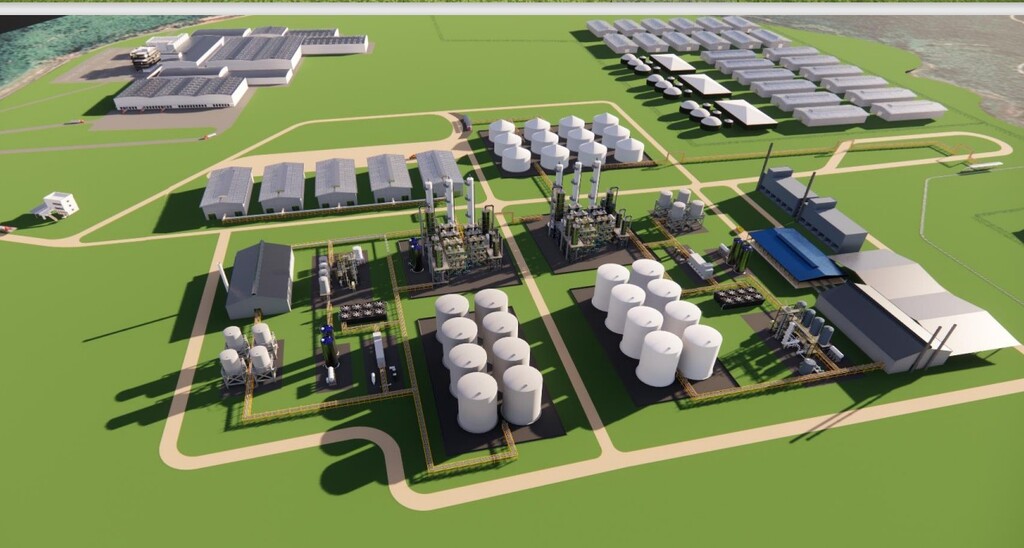

Phase 2: Expanded Refining

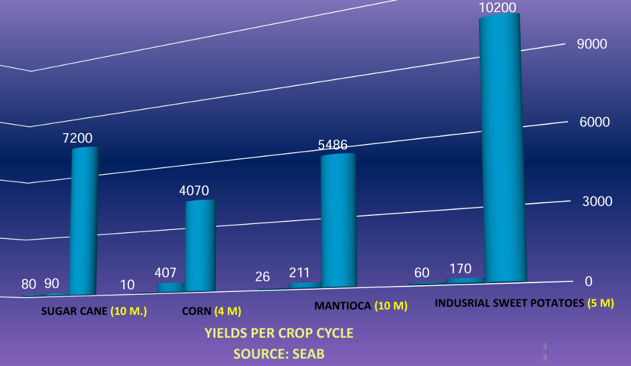
  Ethanol from Ind. Sweet Potatoes, 2 crops a year, 20,400 liters (2.5X corn & cane)

EMBRAPA, the Brazilian national research agency, was able to achieve 100 MT per ha per year sweet potato yields by planting back to back with yields of 60 tons in harvest 1 and 40 tons in harvest 2.  We will use the same protocols and add biochar and SBB soil additives, organic fertilizer and integrated pest management to achieve at least the same result.  100 MT per ha/year potatoes results in 20,000 liters of ethanol per ha that is about 2.5 times greater yield per ha so 2 times less land use change or indirect land use change impacts.
Co-products of sweet potato production and ethanol refining include both vines & leaves (18% protein) and ethanol residual (18-23% protein).  Hogs require 18-20% protein, so this feed can meet almost 100% of their nutrient requirements without planting additional crop hectares.  This negates the notion that ethanol production cuts into food production, since the volume of these by-products is 3 times greater than corn or 5 times more than soy, the main crops used to feed animals now. 

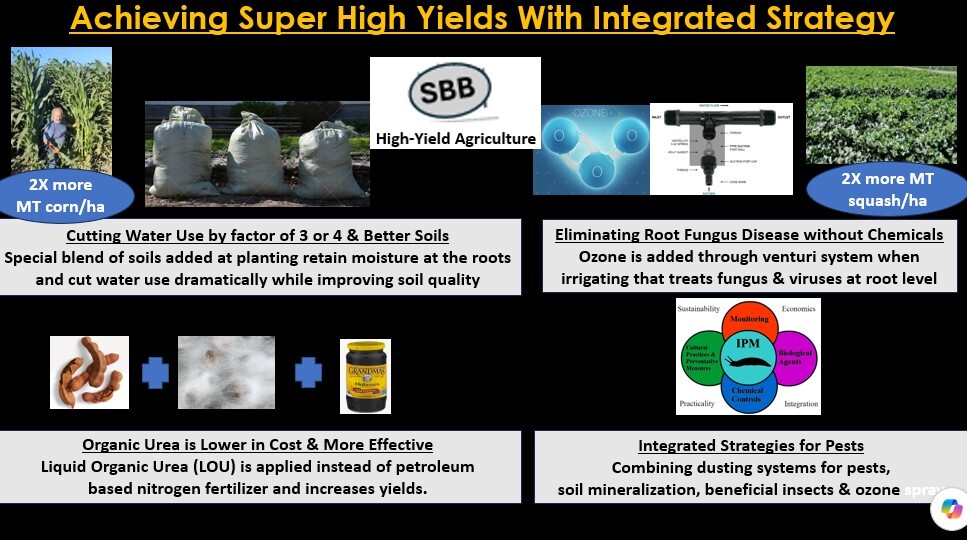
We have licensed a technology package from Sustainable Building Solutions for increasing yields of all crops by combining soil additives, gases in irrigation systems to kill viruses, bacteria, and fungus at the roots, and dusting with minerals to kill insects/worms. In addition, organic fertilizer is produced 4 times faster than normal, making it a viable option. When all steps are combined, field trials have confirmed yields can be doubled on corn, beans, and other crops at a lower cost than traditional approaches. 

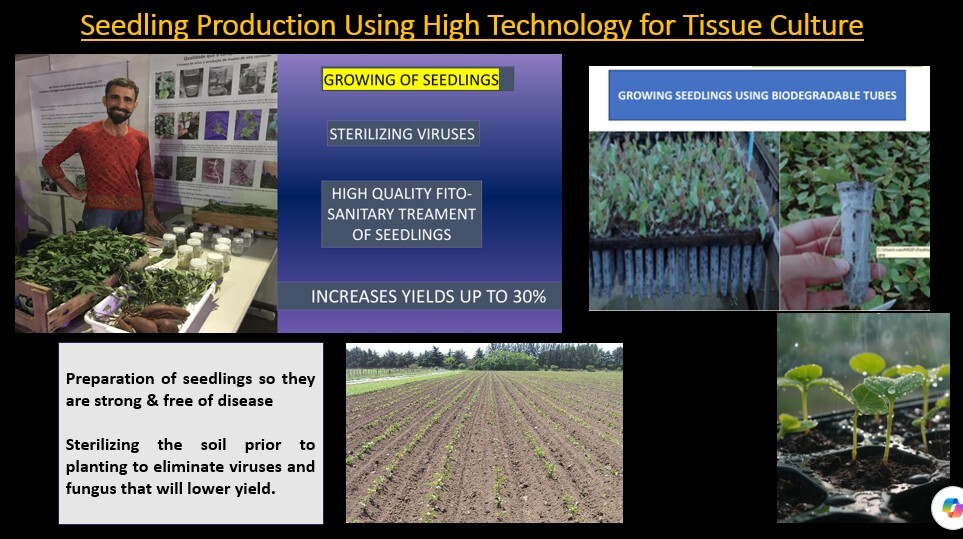
LA key method to achieve high yields is careful attention to sterilizing the soil prior to planting and keeping seedlings safe from disease when growing seedlings or managing cuttings.  We have ozone in irrigation water for this task.  We will grow seedlings in carefully controlled conditions next to industrial biorefinery complex using recycled treated sterilized wastewater.  These steps can improve yield by up to 30%.